Learning sales and consumer behaviour of electronic goods - Part 1
Current Scenario
Electronic consumer goods (like TVs, washing machines, refrigerators, air-conditioners) are largely purchased from retail stores in India. Over the last few years, customers have also started to buy them online. But the split is not so simple and straight-forward.
Smaller goods, with a low ticket size, with strong branding and very less need for a live demonstration are easily sold online. Take bOAT ear plugs and OPPO / RedMi phones as examples. These products are also displayed and sold in retail stores but the share of online sales is increasing rapidly.
As far as heavier goods like air conditioners, refrigerators and washing machines are considered, consumers feel the need to check the products in a retails store, see a live demonstration of the features, have their queries resolved and then buy at the lowest price. Of course, there are also customers who go ahead and buy it online and do not bother to check it out at a store.
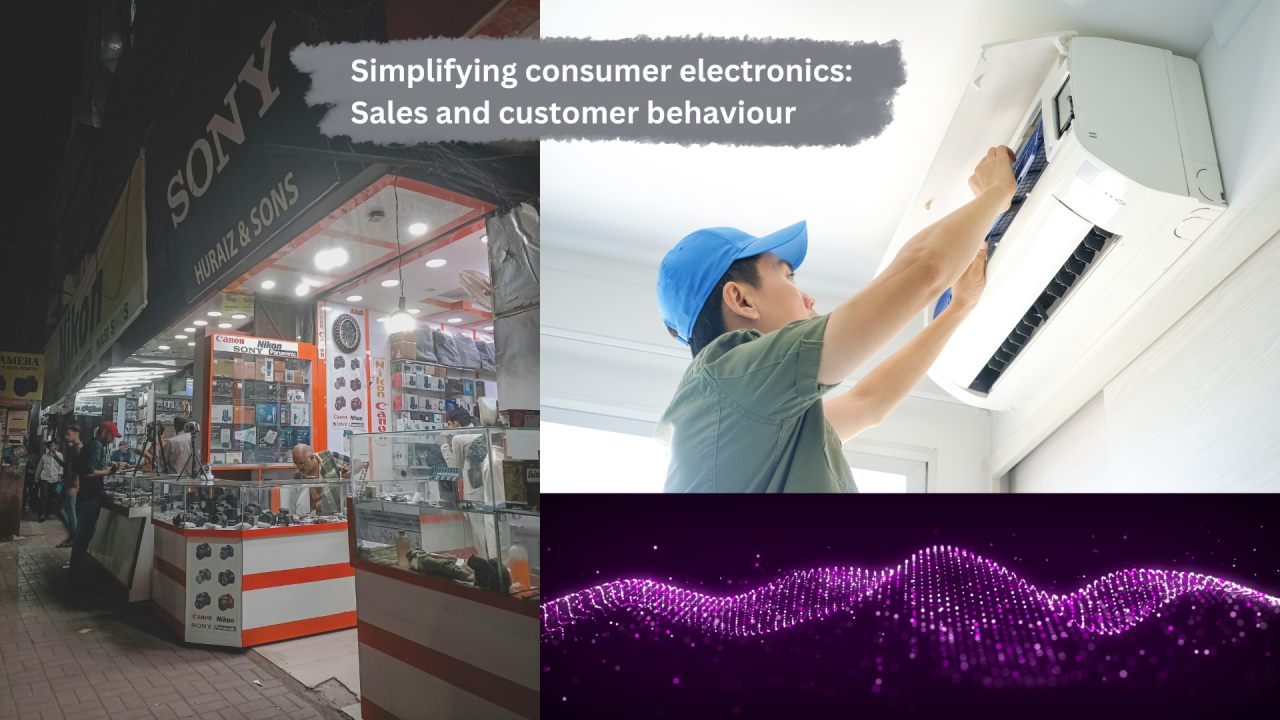
Being on the floor to observe consumer behaviour while they are buying electronic goods
Understanding consumer behaviour is key in retail businesses because in most cases, the products are homogeneous and being sensitive to customer's price and service expectations only can win you a loyal customer.
Think about it - all electronic goods shopkeepers have the same products, service is provided by the brands. The only way for a shopkeeper to succeed in this business is to have huge purchasing power, offer the best price, and put in crazy effort to maintain the loyalty of the customer towards you. These shopkeepers are the best people to learn sales and customer service from.
Business gurus always emphasise on this one lesson - talk to your customer yourself and understand them better. In consumer electronics retail,the best way is to be on the floor and have conservations with customersafter they walk in to the showroom. This eventually helps you design your value chains better.
Here are some short examples for you to learn about consumer behaviour and build successful sales strategies -
- The wrong washing machine:A large majority of customers are not aware of the technology available and how it is useful for them. A family buys a 7.5 kg fully automatic washing machine where a 6.5 kg machine could have easily done their job. Now. it is obvious that the customer will aim to buy the best product at the lowest price and the best sellers know this. Theyask their customers a lot of questions, like, number of family members, kind of clothes to wash, how frequently are heavy blankets washed, etc and suggest a product which suits their budget and serves their need. Such selling strategies build trust in a customer's mind and they become interested in being a loyal customer.
- Difference of Rs. 500:There are some customers who are highly price sensitive. For them, a price difference of Rs. 500 on a product costing Rs. 30,000 is non-negotiable. They will narrow down to a specific brand and product, and then, visit 2 to 3 retailers to know the lowest price (without realising that they are already spending around Rs. 500 commuting between multiple stores). Such price differences exist between shopkeepers mainly because some shopkeepers have more purchasing power than others. The best sellers know such customers and they do not invest time in trying to convince the customer. They instead offer the product at a lower price becausewinning a customer is more important than increasing sales by Rs. 500.
- The one who wants to buy at half the market price:There are customers, specially in consumer electronics, who will say that the same air-conditioner ('AC') with a 'minor damage' is available at half the cost in some remote factory outlet. What do you say to such a customer now? How do you make a sale? The best sellers have a simple answer -educate the customer.Buying an AC worth ~ Rs. 30,000"is not an expense, it is an investment".It is important to buy a safe, new product and enjoy the warranty on it for years than buy a cheap product now and struggle with service issues later. A good majority of customers change their mindset after a 10 minute conversation with the shopkeeper.
If I summarise these lessons -
- it is important to ask questions to your customers. understanding their needs, knowing how they think, targeting the right audience is the key to building rockstar products
- customers are and will remain price sensitive. win a customer first and increase sales later.
- educate the customers. your integrity, quality and genuineness exists but it is only valuable if the customers know it and internalise it
Subscribe to mySimplifynewsletter for Part 2.
Read insights on education industry from my previous articlehere.